navou x lcmd: Scalable building renovation
Project Stats
Project duration
permanent
Project volume
n/a
Industry
Area


The approach and the pilot project
navou has set itself an ambitious goal: Building renovation should be affordable, sustainable, and above all, repeatable to become.
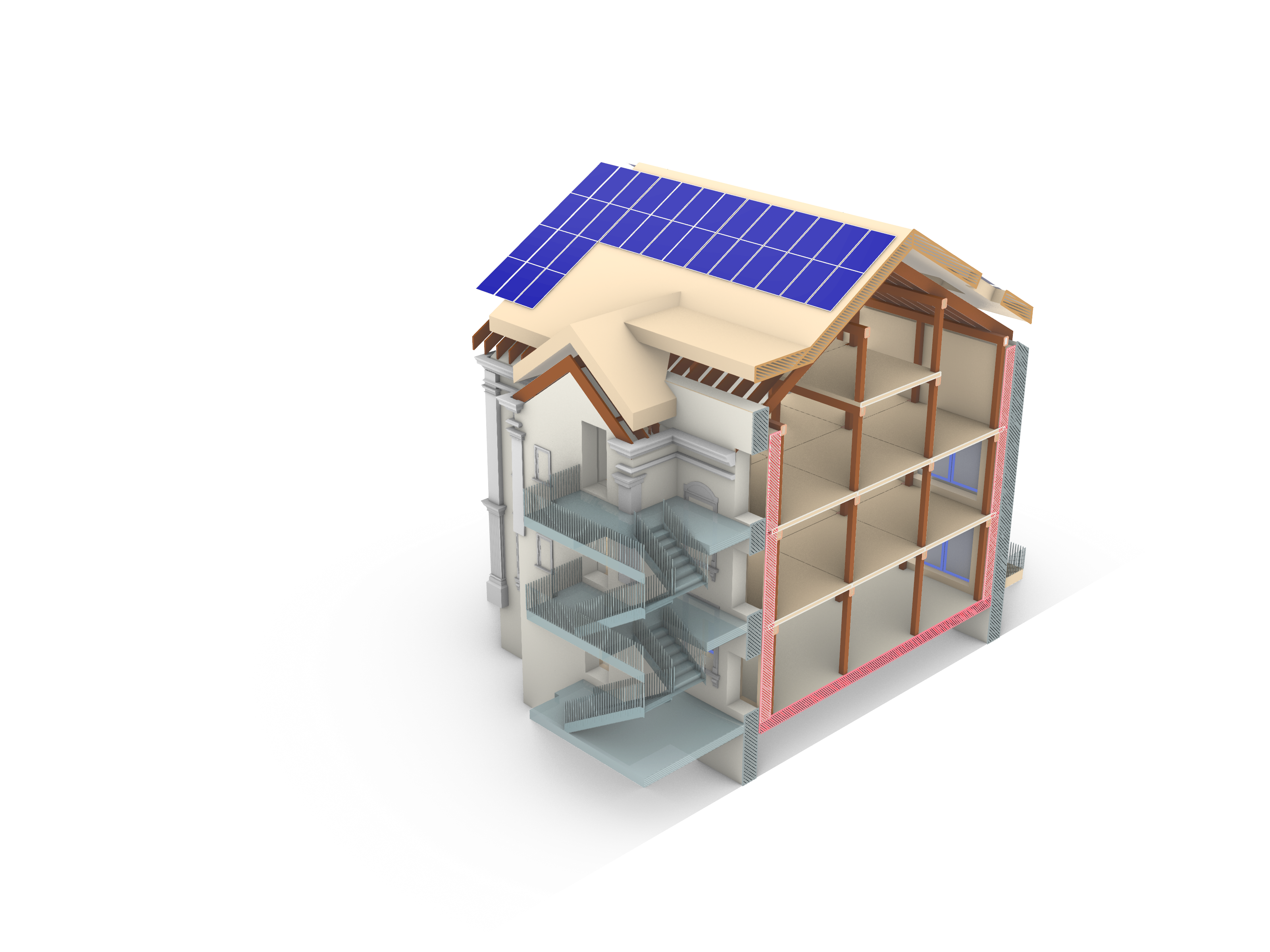
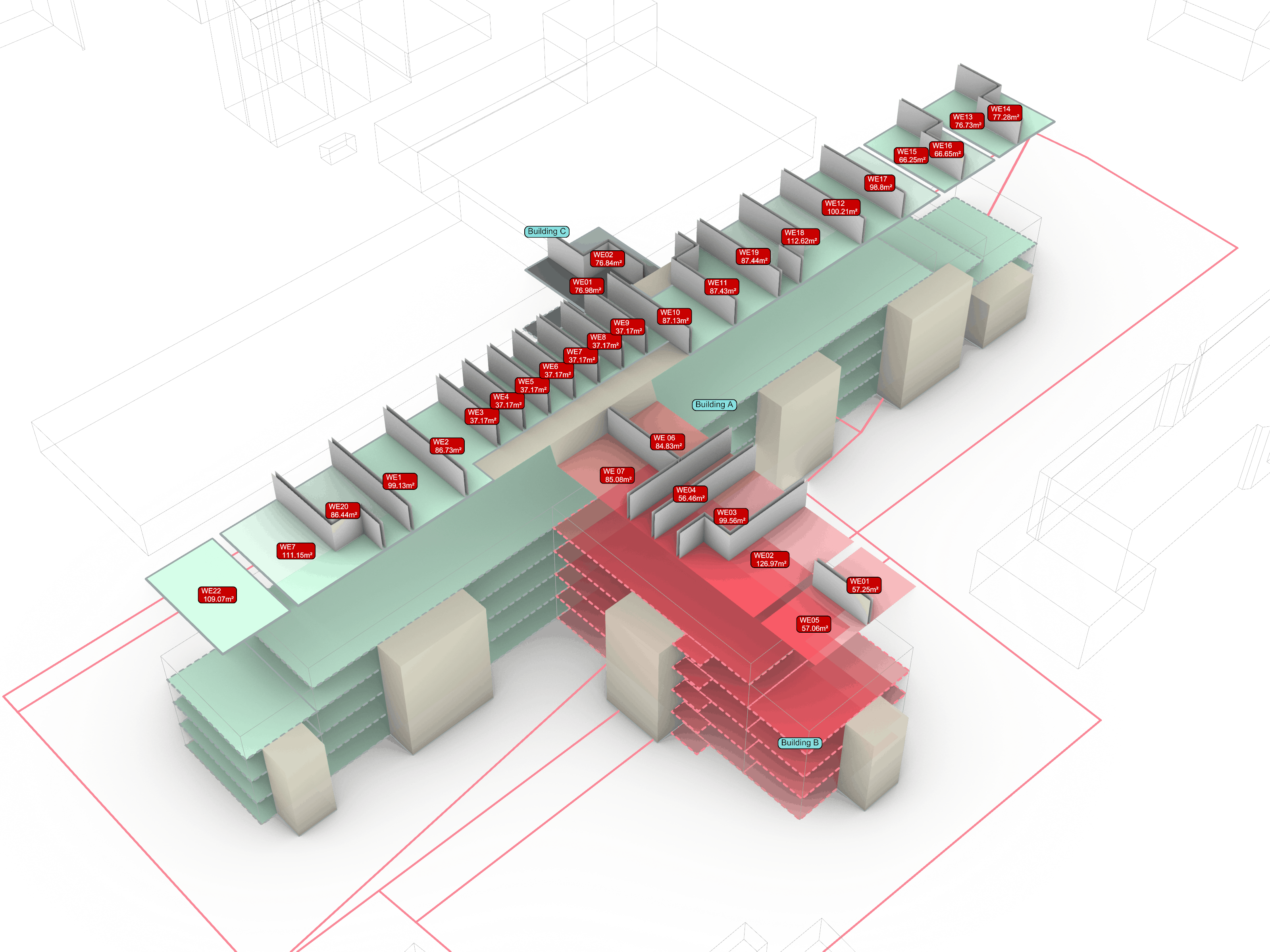
By using publicly available geodata, Navou evaluates vacant residential and commercial properties largely automatically, deriving structural frameworks, zoning, and initial floor plan proposals. This is complemented by a proprietary construction product: a standardized timber-based grid structural system, which is integrated directly into the stripped-back existing structure. This is supplemented by standardized system construction components from the industry, which can already be simulated within the digital Navou system during initial feasibility studies. This makes risks visible at an early stage.
The pilot project for this innovative approach is a building in Bochum dating back to 1880 that has been vacant for years. The ambition goes beyond the individual building: navou can analyze entire real estate portfolios, derive patterns, and define standardized conversion processes. From system construction components to replicable construction workflows.
The solution: An end-to-end system landscape
navou follows a clear principle when building its system landscape: all tools should communicate with each other rather than existing as isolated solutions.
lcmd acts as the central platform for project management.
The software ecosystem includes:
- Rhino/Grasshopper and Revit for existing building assessment, structural design, and floor plan development
- lcmd for standardized process planning and daily task management
- Kaulquappe/BIG for model-based workflows
- CENDAS for status and defect management during the construction phase
lcmd maps the processes, Kaulquappe/BIG represents the model, and Cendas reflects the reality on the construction site. Only by linking these tools does a seamless system landscape emerge, which navou is currently building step-by-step and developing further every day.
No items found.
How navou works with lcmd
navou introduced lcmd directly with its pilot project, without any predecessor tools or parallel systems.
Since then, lcmd has been the company's sole and central project management tool.
Process plan
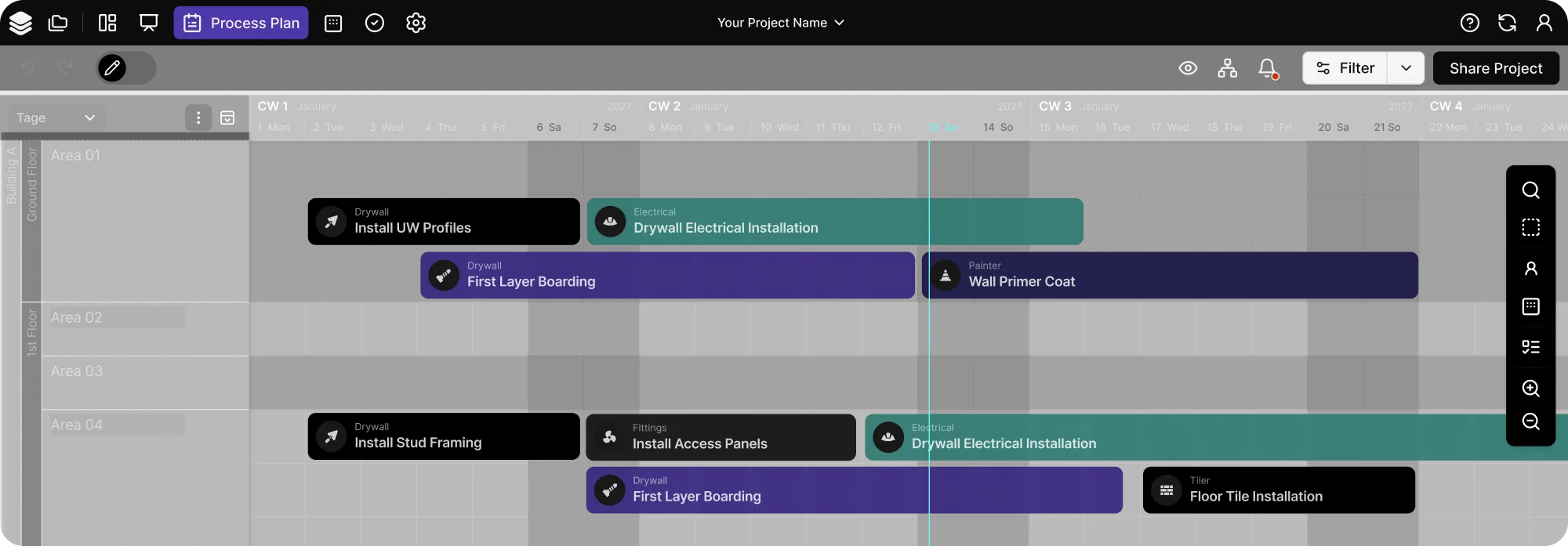
The team's central workspace: primarily in the mountain view with dependency mode permanently enabled. In addition to the trades, the interests of public authorities and the entire approval planning are mapped, including vacation planning, in order to clearly align the phases.
Whiteboard
The heart of standardization. The actual processes carried out in the pilot project are transferred to the whiteboard, where they are developed from the as-is to the target process and are then available as ready-made templates for future projects.
ToDo Hub and Sprints
In their day-to-day operations, the team uses the ToDo Hub for cross-departmental collaboration. During regular sprint meetings, the team reviews tickets together, with the direct link to construction process workflows providing a clear advantage.
Checklists
Procurement processes, requests for proposals, and commissioning are handled consistently using integrated checklists.
Linking instead of duplicating
Floor plans and project documents are stored in SharePoint. Instead of uploading files, Navou works with links in lcmd—a feature developed by lcmd at Navou's suggestion. This maintains a single source of truth rather than creating multiple duplicate storage locations.
What Navou values about lcmd
- Process standardization and the whiteboard function as the core of their business model
- The combination of scheduling and model-based working
- The direct link between ToDos and the entire construction process
- A consistent platform instead of duplicate storage across different systems
- Project and time schedules that can be easily exported as PDFs and shared with external stakeholders
- Intuitive operation without months of training

Outlook
With the insights gained from the pilot project, Navou is now facing its next stage of development: more intensive integration of its system landscape.
Planned measures include the final connection of CENDAS to feed status updates and defects from the construction site directly back into the processes and the ToDo Hub in lcmd. In addition, an even deeper connection with the 3D model via Kaulquappe/BIG is being pursued to visualize project progress by color-coding floors and areas.
At the same time, the scope of work is expanding: a large office-to-residential project is already on the horizon. Naturally, the system landscape is evolving along with it, as the applications grow with Navou, and Navou grows with the applications. It is a young startup making building renovation scalable, supported by a platform that facilitates exactly this kind of project management scaling.
What emerged from the pilot project in Bochum is therefore more than just a single construction project: it is a blueprint that continues to grow with every new project—for Navou, for lcmd, and for an industry that can finally think of building renovation as a repeatable process.

lcmd in symbiosis with Kaulquappe is the only truly end-to-end system on the market that functions based on the fundamental decision to use Revit. There is nothing else that maps the workflow in such a systemically integrated and consistent way.

Sebastian Rademacher
Co-Founder and Head of Product | navou
The greatest added value for us: standardizing processes, having clean and optimized workflows, and keeping everything in one place as much as possible. End-to-end process lines, no duplicate filing. For project management, lcmd is the hub of our system landscape.

Lisa Weise-Hoff
Co-Founder and COO | navou
Discover how lcmd can make your company more efficient too.