Construction and Renovation During Ongoing Operations
Project Stats
Project duration
permanently
Project volume
n/a
Industry
Area

The Karlsruhe City Hospital
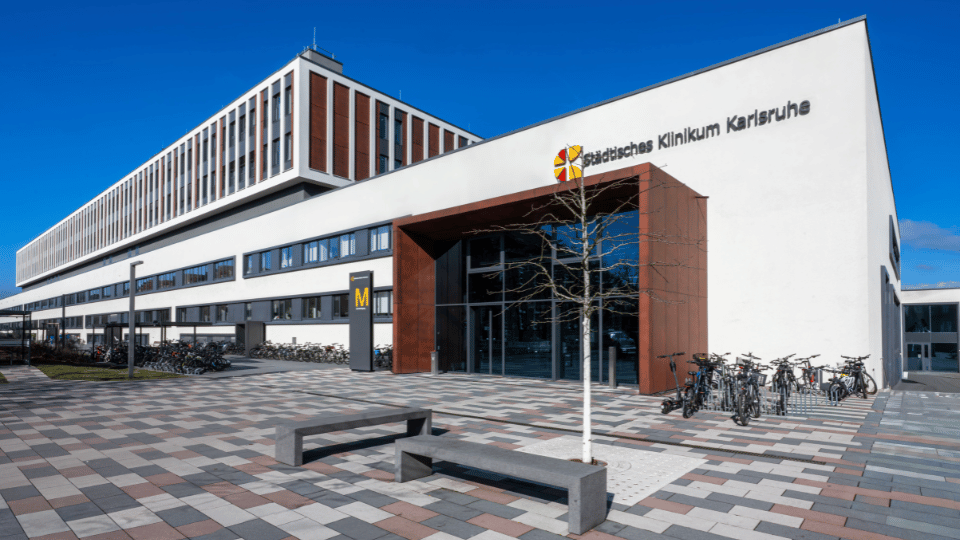
The Städtisches Klinikum Karlsruhe is a maximum-care hospital* and the largest medical facility in the Middle Upper Rhine region. Around 4,500 employees work on a structurally diverse campus featuring 28 buildings, two civil engineering structures, a bridge, and a helipad. In addition, there are ten further buildings located off the main campus.
The Planning and Construction department, with a team of 19, is responsible for the budgeting, preparation, planning, and implementation of all construction and renovation projects. The portfolio ranges from historic buildings dating back to the turn of the century to modern clinical facilities. Depending on the project phase, up to 100, and at times even 150 projects are underway simultaneously.
*Also referred to as a tertiary care hospital or university hospital. A hospital providing the highest level of medical and technical standards within the German healthcare system.
Special features of construction and renovation projects
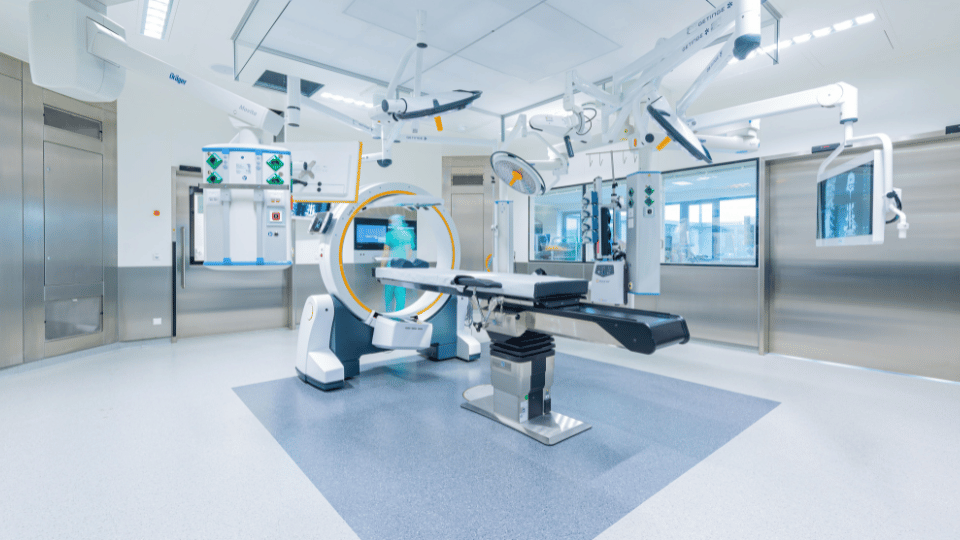
The hospital's construction department manages an exceptionally high number of concurrent projects – almost always while the hospital remains fully operational. Medical and nursing workflows must be minimally affected, if at all, by renovations and construction work. At the same time, priorities can shift at short notice due to operational, medical, or regulatory requirements.
The key challenges:
- Up to 150 concurrent projects in various planning and construction phases
- Construction during ongoing operations with the highest standards for care and safety
- Many stakeholders from medicine, nursing, hygiene, occupational safety, and medical and facility engineering
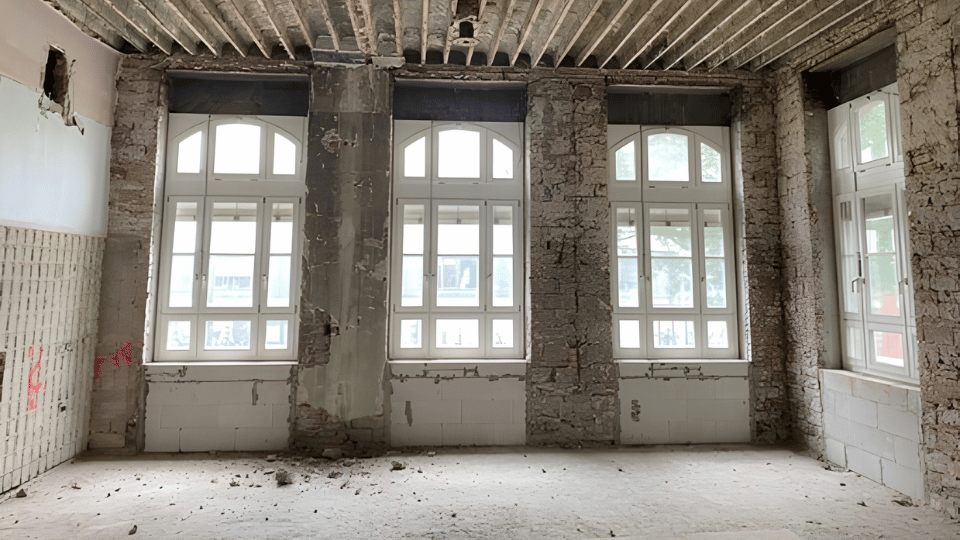
- Heterogeneous building stock ranging from historic buildings to modern clinical facilities
- Shifting priorities due to internal and external requirements
For the department heads, an up-to-date, easily accessible overview was therefore essential:
What is the status of the projects? Which milestones are being delayed? Where are conflicts or dependencies arising?
No items found.
From Excel and Post-its to a digital project overview
Before introducing lcmd, project managers worked with individual schedules in MS Project or Excel. A central Excel overview mapped out five main phases from project start to handover. Because individual phases lasted months or even years, updates were easily overlooked in day-to-day operations. Department heads had to actively request status updates on a regular basis.
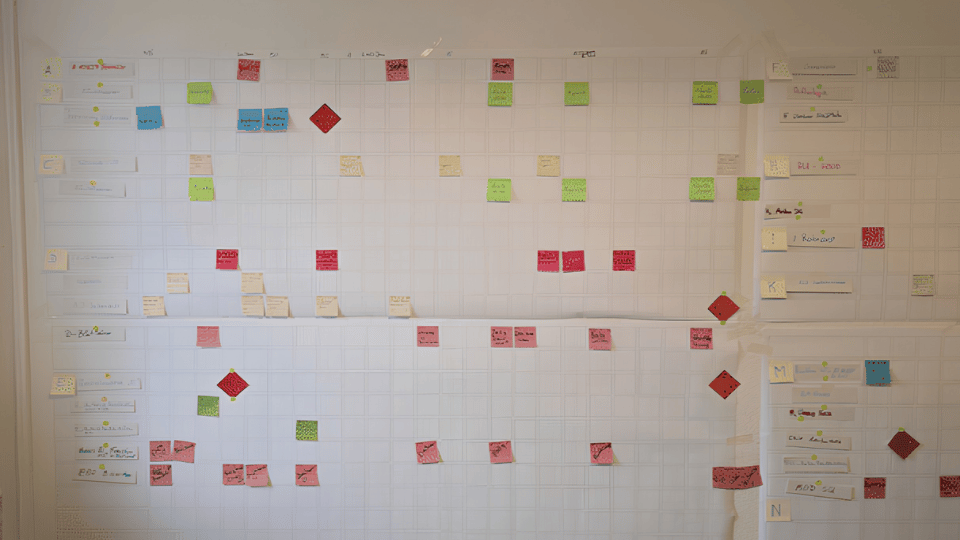
As part of the lean implementation , the team initially created a shared physical pull-planning board with Post-its. The key milestones for all relevant projects were visualized on a timeline and discussed regularly as a team. This provided greater transparency while also highlighting the limitations of the analog board: it was tied to a specific room, changes had to be made manually, and the division management could only access it on-site.
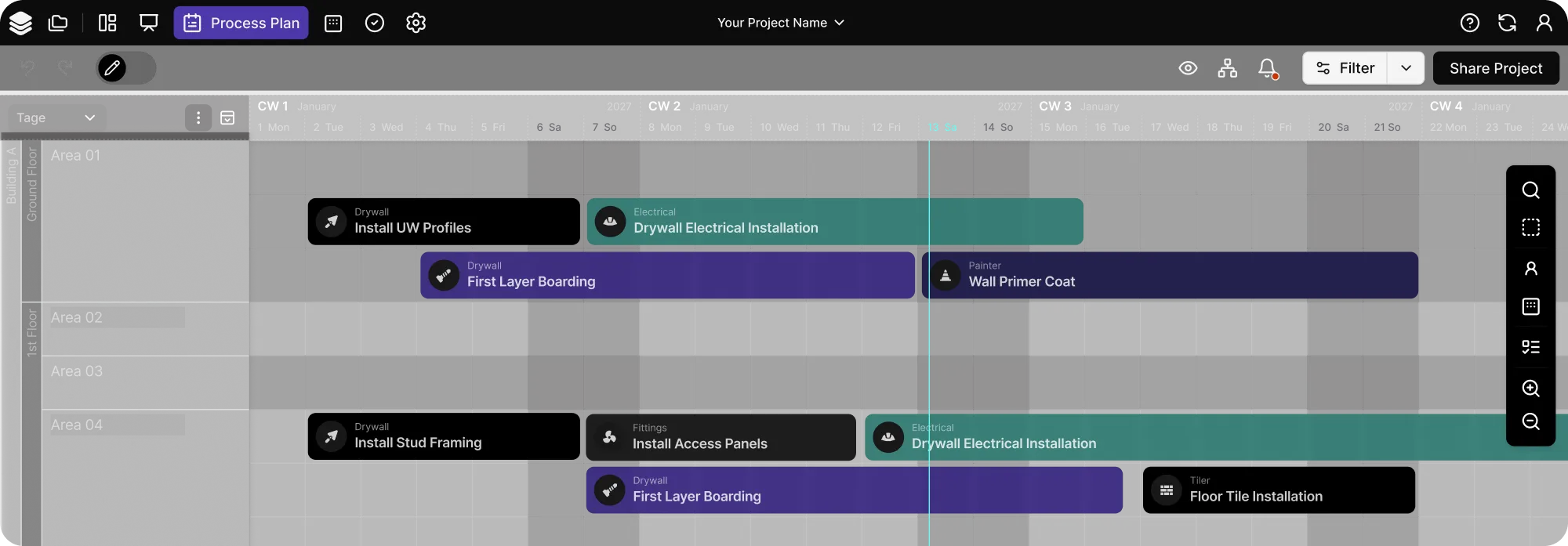
With lcmd, the existing lean board was digitized almost exactly as it was. The lcmd project, known internally as the “PuB Project Board,” is structured by building and area and serves as a high-level management tool. It intentionally displays only the key milestones; detailed scheduling continues to be managed within the individual projects.
Transparency creates accountability
In everyday work, the process plan has become the central element. Milestones, deviations, conflicts, and dependencies can be identified quickly. The project overview is discussed and updated by the team on a regular basis.
The key benefits:
- Transparent overview of the status of all relevant projects
- Greater accountability for deadlines and specific commitments
- Increased personal responsibility within the project team
- Conflicts and dependencies become visible faster
- Direct access for division management – without the need for follow-up questions or trips across campus
- Shared, up-to-date data basis for project management
At the same time, the clinic is gradually expanding its implementation. Two major initiatives are being set up as independent lcmd projects. During the planning phase of a new project, the ToDo Hub will also be used. Excel and MS Project are not being phased out abruptly: the transition is being managed intentionally as a change process.

As a department head, my ability to manage and steer projects has significantly improved. I can see everything at a glance: What is the status of our projects? Is anything stalling? Are there any issues with dependencies? That is the main advantage for me.
.png)
Sefan Binder
Head of Planning and Construction | Städtisches Klinikum Karlsruhe
Lean construction: hitting the mark
The scale of the potential of the Lean approach was demonstrated by the Central Emergency Department project. After the first construction phase did not go as planned using traditional scheduling, the team switched to the Last Planner® method.
The self-imposed completion deadline of August 31st was only met thanks to this approach, even though the original external schedule had projected a late October finish, according to Stefan Binder (Head of Planning & Construction).
For construction execution, Stefan Binder continues to value the tactile and committed nature of working with a Pull Planning Board. This makes the clinic’s planned integration of both worlds with the upcoming lcmd StickIt app all the more interesting: a digital way to capture analog pull planning sessions and transfer them into lcmd.
Why the Karlsruhe City Hospital values lcmd
They particularly value the intuitive interface, the clear presentation and the close collaboration with the lcmd team.
The regular status meetings focus not just on individual software functions, but on how lcmd can support actual workflows in construction and project management. Feedback regarding software optimizations and features is taken on board by lcmd and developed further together. For the hospital, the primary benefits are location-independent transparency, a shared project overview and the ability to transition Lean Construction methods step by step into a digital way of working .
Discover how lcmd can make your company more efficient too.