
Share this article:
.svg)


.svg)
.svg)

Key Takeaways from this article
- A delivery can be logged as received and still fail the test that matters on site: whether the scheduled work can actually begin.
- Materials can account for 50 to 60 percent of total project cost, giving their timing and availability a direct line to overall project performance.
- Each stage of the material lifecycle should update the next, keeping the plan responsive to how the project is actually progressing on site.
- Material status becomes a project controls signal only when it shows whether the next scheduled activity is actually ready for execution.
- The value of material tracking lies in reaction time, how early a change becomes visible while the team still has practical options to respond.
The delivery note says the material arrived yesterday. The site plan says the activity starts this morning. The crew reaches the work area and finds nothing there. Material can be recorded as delivered and still fail the one test that matters on site: whether the planned work can begin.
Understanding Material Management in Construction
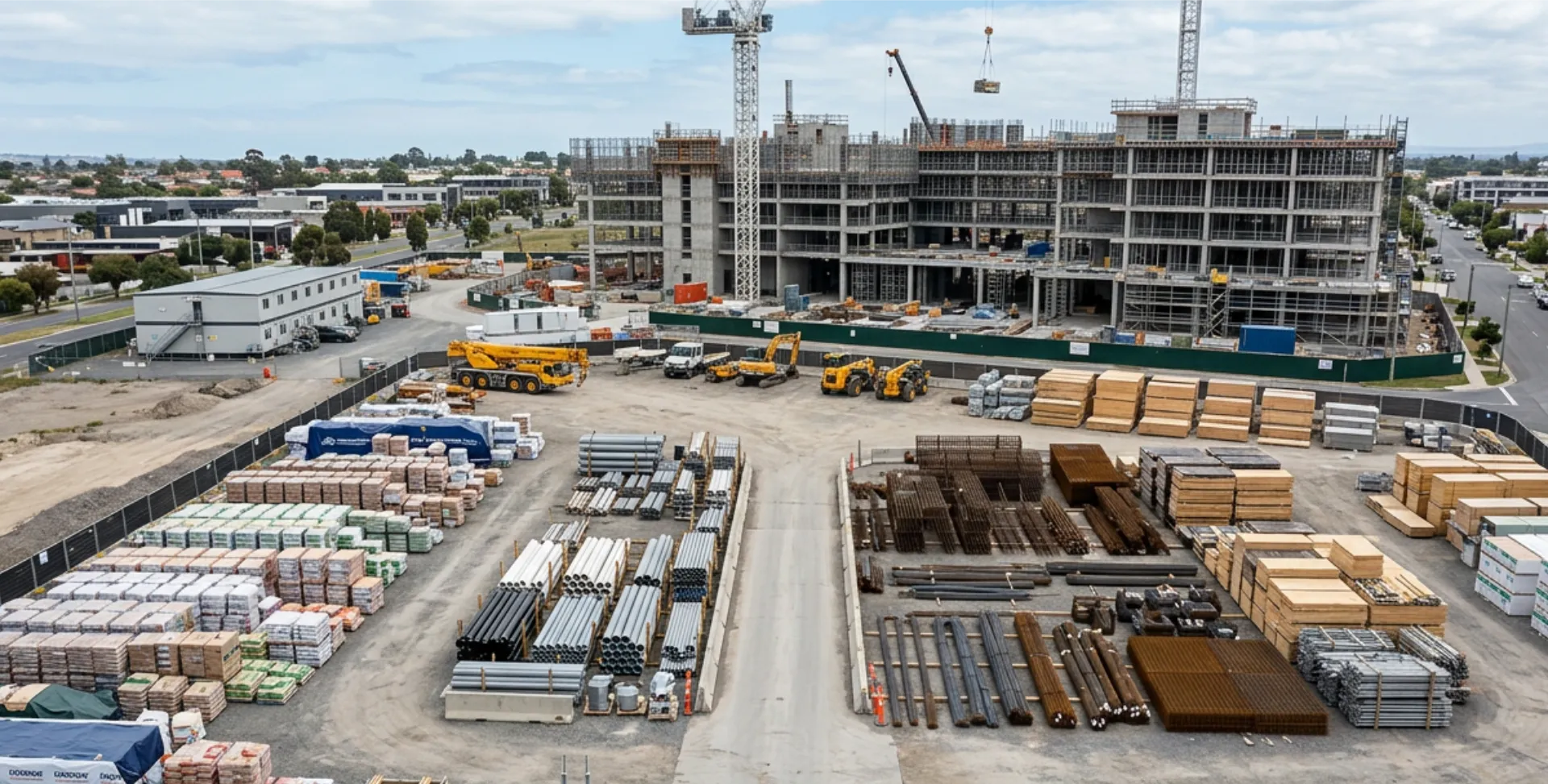
Construction material management is the practice of planning, procuring, and controlling the materials a project needs, matched to when and where the work actually happens. In typical construction projects, materials can account for 50% to 60% of total project cost, which makes their availability, timing, and control a major factor in project performance. Done well, material management helps keep scheduled work moving by reducing shortages, excess stock, and avoidable disruption.
The Five Rights of Material Management
Procurement literature has long framed purchasing around five rights. A well-known statement of the objectives of purchasing puts it this way:
…to acquire the right quality of material, at the right time, in the right quantity, from the right source, at the right price.
Baily et al., Procurement Principles and Management, 11th edition
Modern procurement bodies use a closely related formulation. ASCM describes the five rights, or five Rs, as a traditional procurement formula, while the CIPS Global Standard defines them as:
- Quality
- Quantity
- Price
- Time
- Place
Baily uses right source, while ASCM and CIPS use right place. For material management in construction, these rights become operationally real when they are tied to the live project schedule and actual work sequence.
How to Manage Construction Materials Across the Project Lifecycle
Managing construction materials means aligning material demand with the work ahead, then controlling what happens across five connected stages, from planning through final reconciliation. Each stage feeds information into the next, keeping material decisions connected to the project schedule throughout execution.
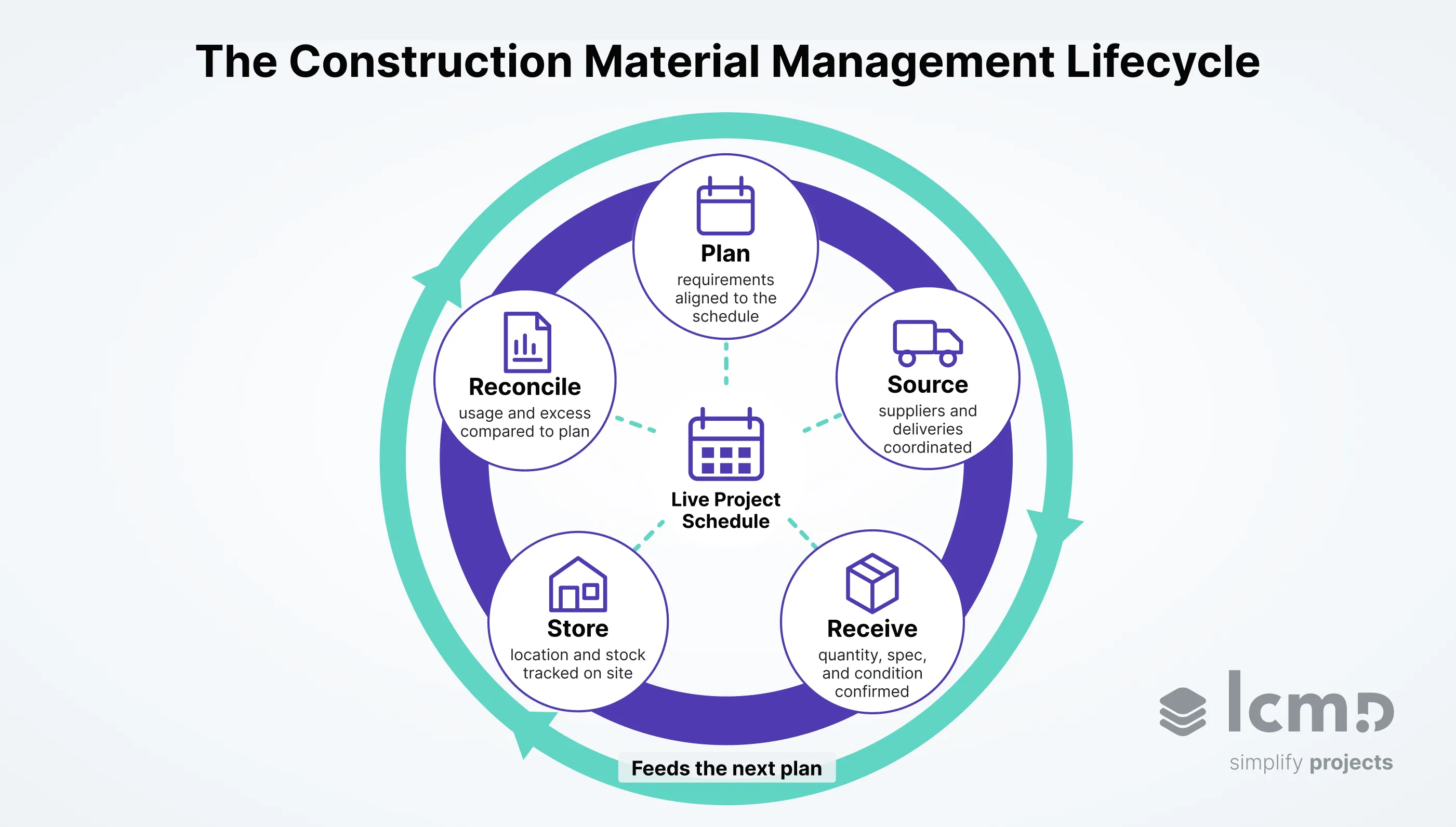
1. Plan Material Requirements Against the Schedule
Material planning starts with the work that is actually scheduled. Identifying material requirements means defining the types, specifications, and quantities each activity needs, then assigning required-on-site dates according to lead times and the installation sequence.
Accurate material forecasts and takeoffs help prevent over-ordering and shortages. Connecting those requirements to construction schedule management turns a project-wide estimate into time-based demand. When activities move, the material dates supporting them need to be reviewed as well, so procurement has time to adjust before a shortage affects the schedule.
2. Source Materials and Coordinate Deliveries
Material sourcing turns planned demand into supplier commitments, purchase decisions, and delivery schedules. Materials procurement teams need visibility into lead times, approved specifications, supplier availability, and when each item will actually be required on site.
- Supplier coordination: confirm lead times and delivery windows early, and update suppliers when the work sequence changes.
- Centralized procurement: keep approved suppliers, purchase orders, and delivery commitments visible to the teams responsible for procurement and execution.
- Just-in-time delivery: coordinate material deliveries with site readiness to limit unnecessary stockpiling, handling, and congestion.
3. Receive, Inspect, and Record Every Delivery
A delivery becomes usable project material once the site has confirmed that it is correct, acceptable, and recorded.
Recording when materials arrive creates a direct comparison with planned availability. Inventory tracking can then show late, incomplete, or rejected deliveries while there is still time to assess their effect on upcoming work.
4. Store, Track, and Distribute Materials on Site
Once materials are accepted, their location and condition need to remain visible. Designated storage locations should account for a few essentials:
- Weather protection and security suited to what's stored
- Clear labeling so nothing gets misplaced
- Layout and movement routes that keep frequently used materials accessible to the crews that need them
Material tracking keeps inventory levels, locations, and movements visible as stock moves through the site. Digital inventory systems can support that shared record, while low-stock alerts can flag shortages before critical items run out. Proper storage and handling also help preserve material quality after acceptance.
5. Reconcile Use, Excess, and Waste
The lifecycle closes by comparing what was ordered with what was actually consumed. Teams can identify excess materials, reusable stock, damaged items, and material waste, then decide what should be reassigned, recycled, or disposed of correctly to reduce waste rather than let it sit unused.
Tracking excess inventory helps reveal over-ordering and materials occupying space or tying up project costs without supporting current work. Actual consumption and remaining stock should then feed back into the next planning cycle, improving material forecasts for the work still ahead.
Material Availability as a Project Controls Signal
The construction material management lifecycle also produces information the project team can use to judge the work ahead. Read against upcoming activities, material status answers a project controls question: is the next activity actually ready to start as planned?
Purchase orders and delivery confirmations show what was ordered and what arrived. Inventory management adds visibility into what is accepted, where it sits, and how much remains. Together, these records show whether materials have cleared receiving and quality checks, reached the required location, and are ready for execution. This is where construction material management starts informing project controls.
Material Deliveries and Make-Ready Constraints
A late delivery, rejected batch, incomplete quantity, or material still stored elsewhere on the construction site can become a schedule constraint during make-ready planning.
Flagged early, a team has several ways to respond:
- Expedite the delivery
- Resolve the issue causing the rejection or shortfall
- Move stock to where it's actually needed
- Resequence the work around it
- Release another ready activity in its place
Project managers gain options while the issue is still manageable, before it reaches the crew and becomes lost progress.
Material Tracking for Early Warning and Cost Control
Material tracking adds another layer by showing drift while there is still time to correct it:
- A delivery slipping beyond its required date raises risk for the activity it supports.
- Consumption running ahead of forecast can indicate a future shortage.
- Material stock building faster than planned progress can tie up capital and increase storage costs.
Read together, these signals become inputs for project controls and earlier corrective action, catching the drift before it reaches the schedule.
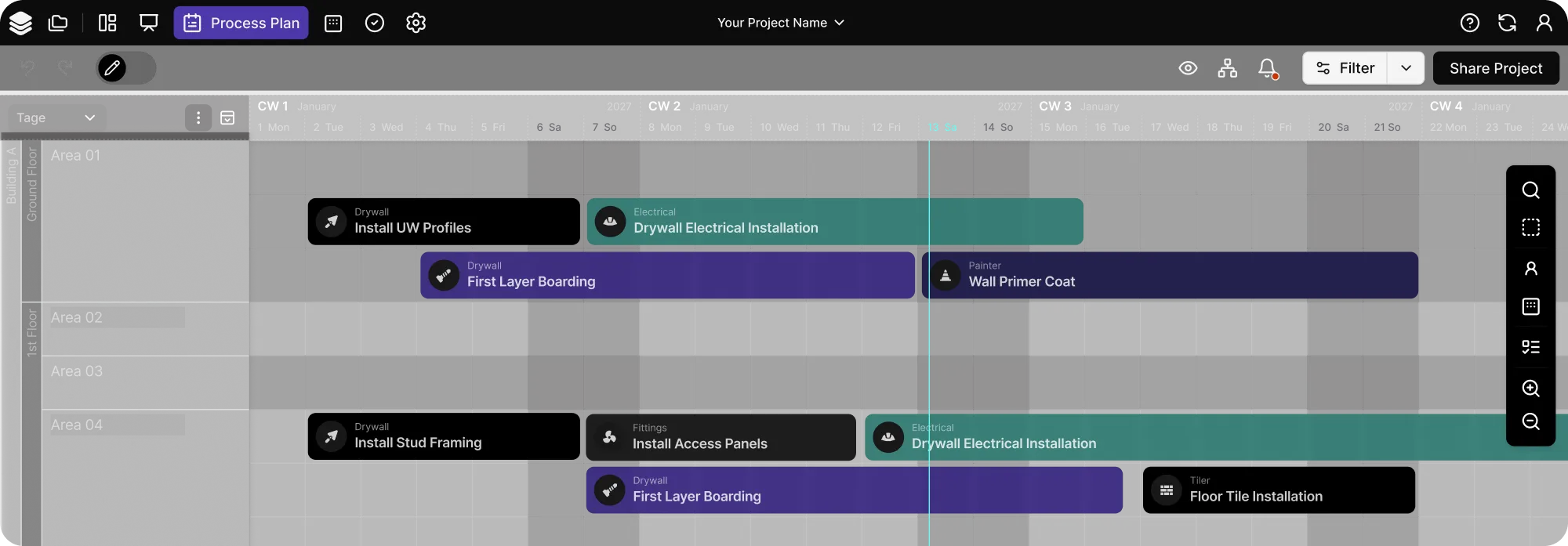
Lcmd keeps upcoming work, constraints, and schedule changes visible in the same planning context. Material-related issues can surface early enough for construction teams to coordinate a response before they become project delays.
Construction Material Management That Keeps Work Ready
Effective construction material management creates a reliable link between material flow and project execution.
Managing the full lifecycle keeps that link visible as the project moves forward, giving teams a clearer view of whether upcoming work is truly ready. When material status changes, there is still time to respond while the issue is manageable.
The process proves its value when the crew reaches the work area and finds exactly what the plan said would be there.
{{cta}}
Construction Material Management FAQs
Who Is Responsible for Material Management on a Construction Project?
Material management is usually split across several roles on a construction project. The project manager or superintendent coordinates material requirements with the schedule, procurement handles sourcing, and site staff manage receiving and storage. On larger projects, a dedicated materials manager may coordinate these responsibilities and keep material status connected to the work ahead.
What Is the Difference Between Materials Management and Procurement in Construction?
Procurement is the sourcing stage inside materials management: confirming suppliers, placing purchase orders, and securing delivery commitments. Materials management continues after that point, through receiving, storage, and reconciling what is actually used as work progresses. A project can have strong procurement and still lose track of material on site, because keeping status visible after the order is placed is a separate, ongoing job.
What Causes Inaccurate Material Forecasting During Construction?
Inaccurate material forecasting often develops when an original estimate is not updated as the project changes. Schedule slippage, design changes, and revised work sequences can all shift what a task actually needs by the time it starts. Updating forecasts with current site and progress information keeps future requirements aligned with the work still ahead.
What Features Should Construction Material Management Software Have?
Construction material management software should connect material status directly to the work it supports. Quantity, location, and delivery timing should be visible against the activity that needs them, turning inventory data into a planning input the project team can act on. Additional features depend on project size and how procurement, scheduling, and site data are already managed.